
May 11, 2026
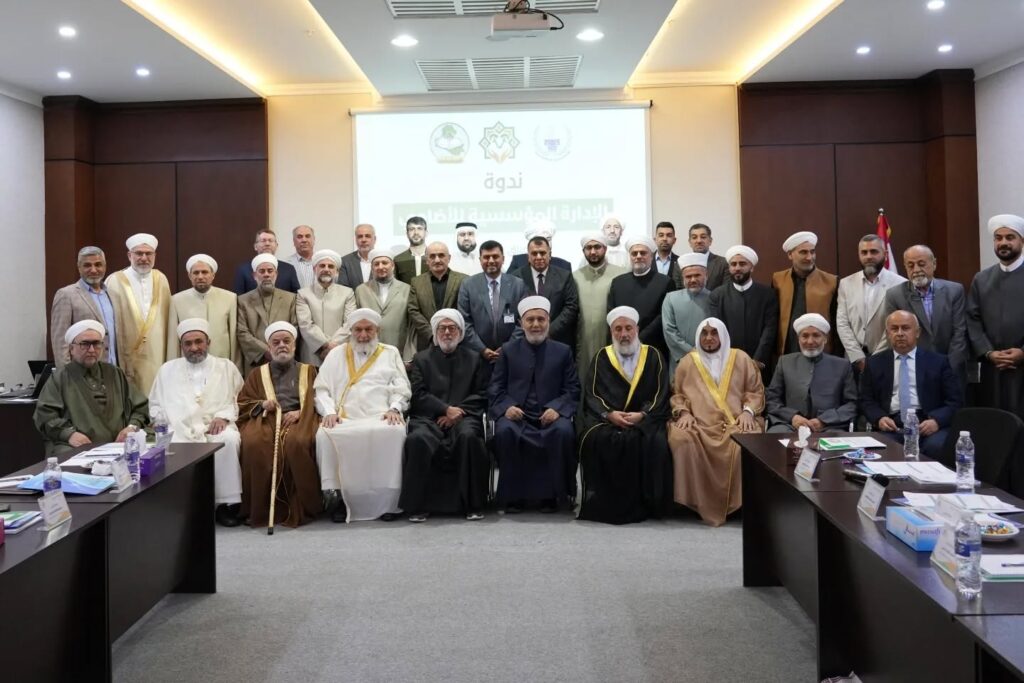
As cross-border Qurbani (sacrificial) projects expand, and the number of beneficiaries and donors increases year after year, the jurisprudential questions related to institutional Qurbani management have become more urgent than ever. Hence, the specialized jurisprudential symposium hosted by the city of Erbil, at the invitation of the Iraqi Council of Scholars and organized by the Al-Rakeezeh Foundation for Relief and Development, opened this complex file on the table of a select group of senior scholars, jurists, and experts working in the humanitarian sector.
The symposium, held under the title “Institutional Qurbani Management in Iraq,” was not merely a traditional jurisprudential gathering but rather resembled a collective workshop seeking to reshape the relationship between jurisprudence and reality, between religious texts and the complex operational challenges facing relief institutions during Qurbani seasons.
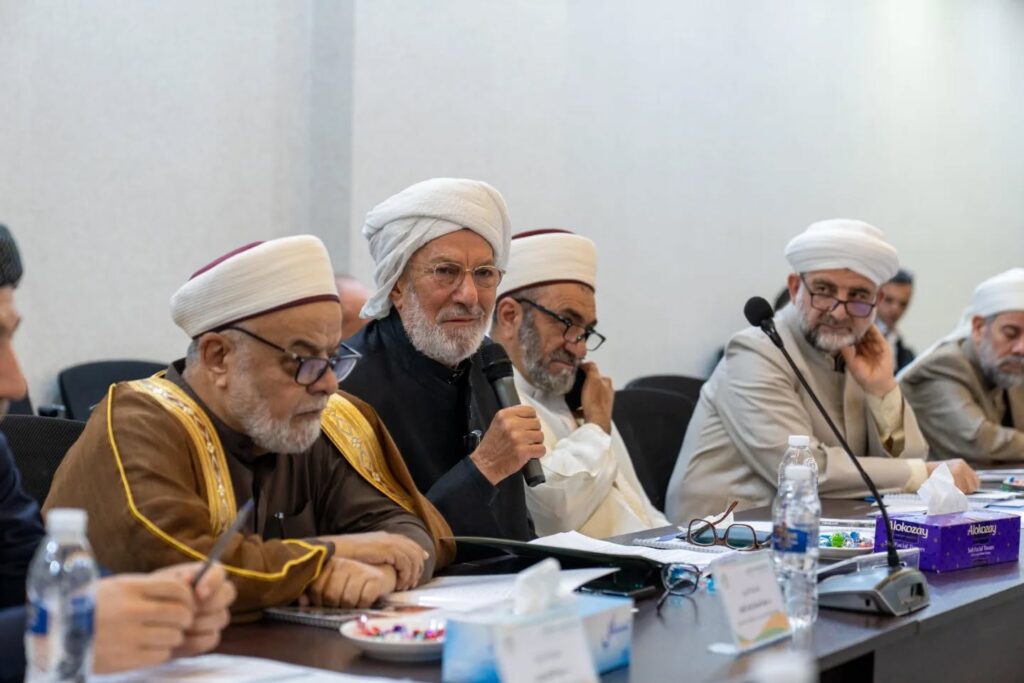
Over long hours of discussion, participants exchanged views on many practical problems that have become part of the daily reality of charitable institutions; from the execution of thousands of sacrifices within limited hours, to the management of electronic authorizations, and finally to the files of cross-border transportation, freezing, and distribution.
Jurisprudential Ijtihad and the Necessity of Institutional Work
The symposium opened with a statement affirming that “great religious rituals require more than just good intentions; they need collective ijtihad that preserves Sharia purposes and takes into account contemporary changes”—an idea that remained present in most subsequent interventions.
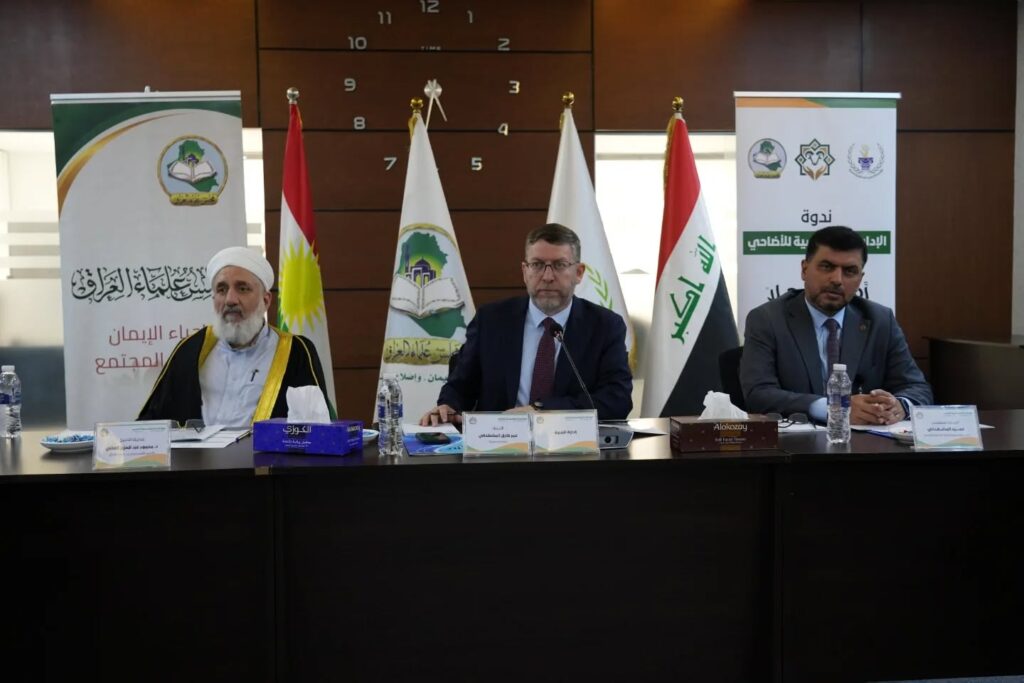
During the sessions, Mr. Hamid Al-Mashhadani, President of the Al-Rakeezeh Foundation for Relief and Development, stressed that institutional development in charitable work is no longer an administrative luxury but has become a Sharia and humanitarian necessity, especially in light of the expanding scope of humanitarian disasters, displacement, and famines in several Islamic countries.
His Eminence Sheikh Dr. Mahmoud Abdul Aziz Al-Ani, Secretary-General of the Iraqi Council of Scholars, also pointed out that “true jurisprudential ijtihad is inseparable from people’s reality, and that the primary purpose of Qurbani is to achieve the meanings of worship and solidarity together, not merely preserving traditional methods of execution.”
His Eminence added that relief institutions now manage complex operations including purchasing, slaughtering, cooling, international transport, and field distribution, which makes the discussion of Qurbani today completely different from the traditional individual images addressed by old jurisprudence books, while simultaneously affirming that changing means does not mean neglecting Sharia constants.
Contemporary Nawazil in Qurbani Projects
One of the heated discussions was regarding the issue of transporting Qurbani outside the donor’s country, a matter that has sparked wide debate in recent years, especially with institutions’ tendency to implement Qurbani in the poorest countries or in disaster and conflict zones.
Participants concluded that transporting Qurbani is permissible when a Sharia-considered need is met, considering that delivering meat to famine and displacement zones may sometimes be “closer to the purposes of Sharia than local slaughter.”
In the same context, attendees discussed the issue of freezing and canning meat, one of the matters imposed by the nature of modern relief work, especially in cross-continental projects. Deliberations affirmed that modern methods of preservation and transport do not contradict the purpose of the ritual as long as they ensure the delivery of Qurbani to its deserving recipients and maintain its safety and quality.
Among the issues that also received notable attention was the matter of executing Qurbani within large collective projects, where hundreds or thousands of sacrifices may be slaughtered within close hours. In this regard, some jurists explained that the condition of pronouncing the names of donors individually during slaughter is not consistent with the nature of modern institutional work, and that the essence is achieved through intention, proper authorization, and precise administrative discipline.
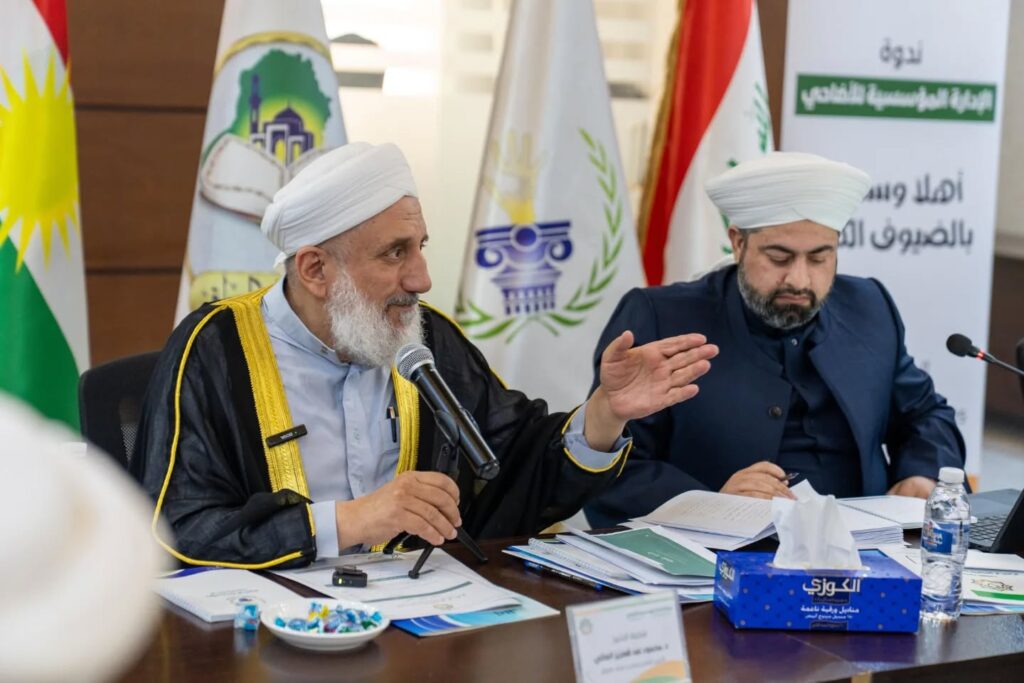
The symposium also discussed the problem of “unifying Qurbani prices” between different countries, an issue faced by many international institutions. Discussions concluded that justice and transparency must be observed, and a unified price should not be imposed if the differences between countries’ costs are significant to the extent of causing “flagrant injustice” to some donors.
Humanitarian issues were not absent from the discussions, as the symposium addressed the ruling on distributing Qurbani meat to non-Muslims in mixed camps and displacement zones. The prevailing opinion concluded that it is permissible within the framework of human benevolence and charity, giving priority to Muslims when resources are limited.
The Ten Fatwas on Institutional Qurbani
Following the deliberations, the final statement was issued containing ten detailed fatwas addressing the most prominent contemporary nawazil related to institutional Qurbani, starting from the ruling on electronic authorization, to transportation, freezing, differing intentions, and ending with pricing controls and financial transparency. The statement was keen to combine jurisprudential foundation with a purpose-driven vision, focusing on governance, oversight, and financial disclosure as essential elements for the success of institutional work.
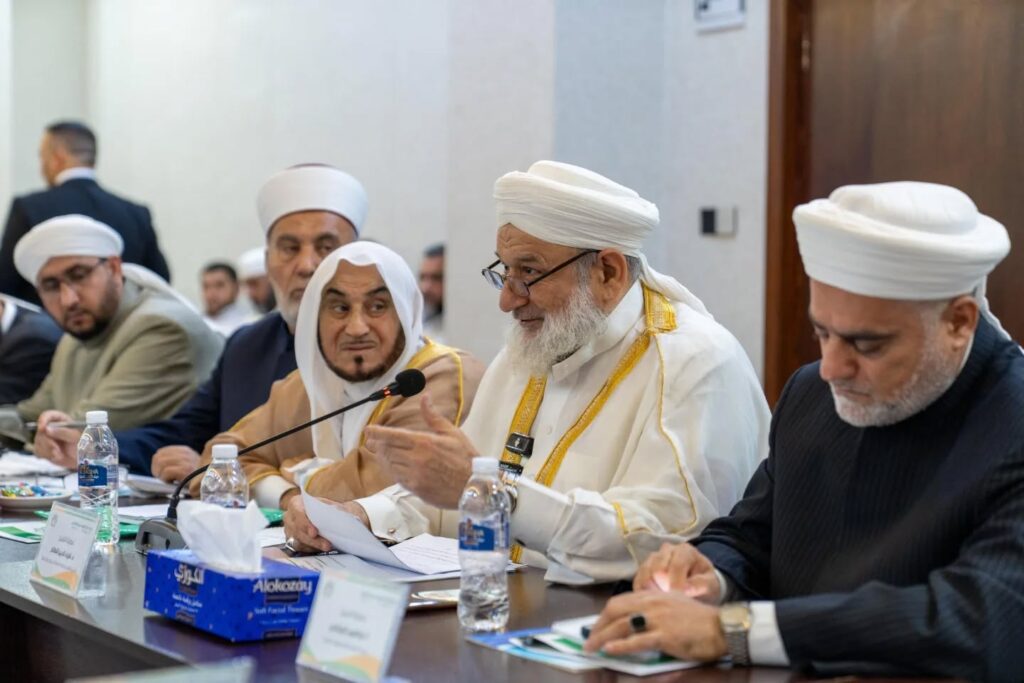
The symposium was attended by more than twenty senior scholars from various governorates of Iraq, including members of Iraqi and Kurdish jurisprudential councils, university professors, as well as representatives of ten humanitarian and relief organizations interested in institutional Qurbani projects.
At the conclusion of the symposium, it became clear that participants were not merely issuing theoretical rulings but were trying to outline a new model for managing Qurbani; a model that combines Sharia discipline with institutional efficiency, responding to contemporary global transformations without losing the spirit of the ritual and its greater purposes.
As charitable institutions move towards expanding the scope of their cross-border work, this symposium appears to be an advanced step towards building a modern jurisprudential reference capable of keeping pace with this transformation and providing practical answers to questions that are no longer postponable.
Jurisprudential Fatwas on Institutional Qurbani Issues – Click to Download PDF